On this page
What does u_ mean on a Miele induction cooktop?#
It means the zone sees no suitable cookware. Either nothing is on it, the pan is not made for induction, or the pan base is too small. If that stays so, the zone turns itself off after 15 seconds. 12
The cooktop recognizes cookware on its own and also its size. A zone heats only if a pan with a magnetic base is standing on it. 2 A coil under the glass makes a magnetic field that reacts with the pan base and heats the pan; the zone is warmed only by the pan. 2 That is why a pan that is not magnetic leaves the zone dark, and why a tiny pan may not be sensed.
Miele's manual for the KM 7735 FL, KM 7745 FL and KM 7755 FL (M.-Nr. 12 161 430) describes the symbol lighting up or alternating with the set power level in one zone when any of four things are true: no cookware is present, unsuitable cookware is present, the base diameter is too small, or suitable dishware was removed from the zone. 2 You get 15 seconds: put a suitable pan on, the symbol goes out, and cooking continues with the earlier settings. If you switch to a different pan or food, adjust the settings. 2
Our code row for the symbol: u_ on a zone.
Which pans work, and how do I test one?#
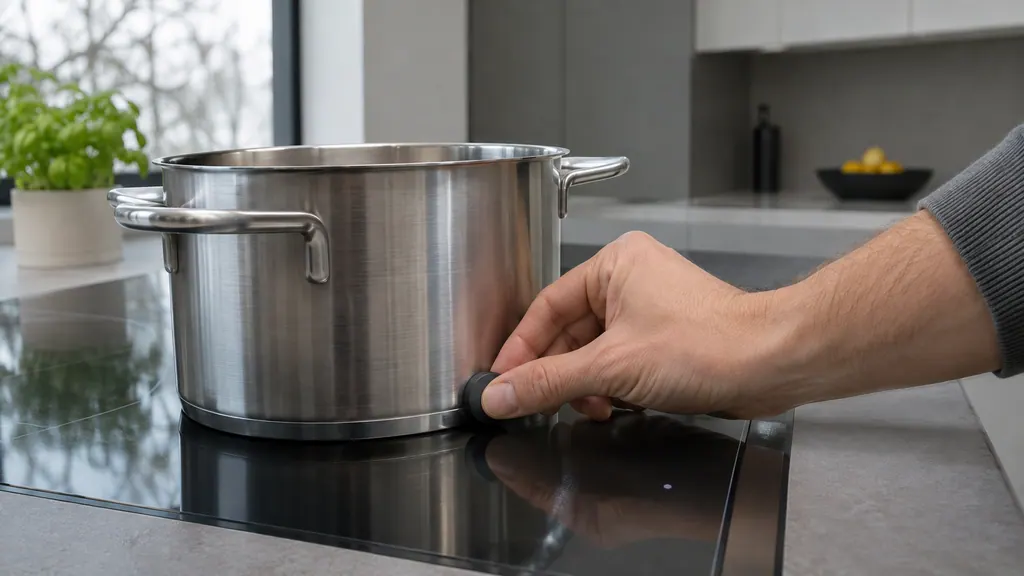
These materials work: stainless steel with a magnetic base, enamel-coated steel and cast iron. Non-magnetic stainless, aluminum, copper, glass, ceramic, earthenware and stoneware do not work. A magnet that clings underneath is the quick test. 12
| Material | Works on induction? | Source |
|---|---|---|
| Stainless steel with a magnetic base | Yes | 12 |
| Enameled steel | Yes | 12 |
| Cast iron | Yes | 12 |
| Stainless steel without a magnetic base | No | 12 |
| Aluminum or copper | No | 1 |
| Glass, ceramic, earthenware, stoneware | No | 1 |
- 1
- 2
- 3
- 4
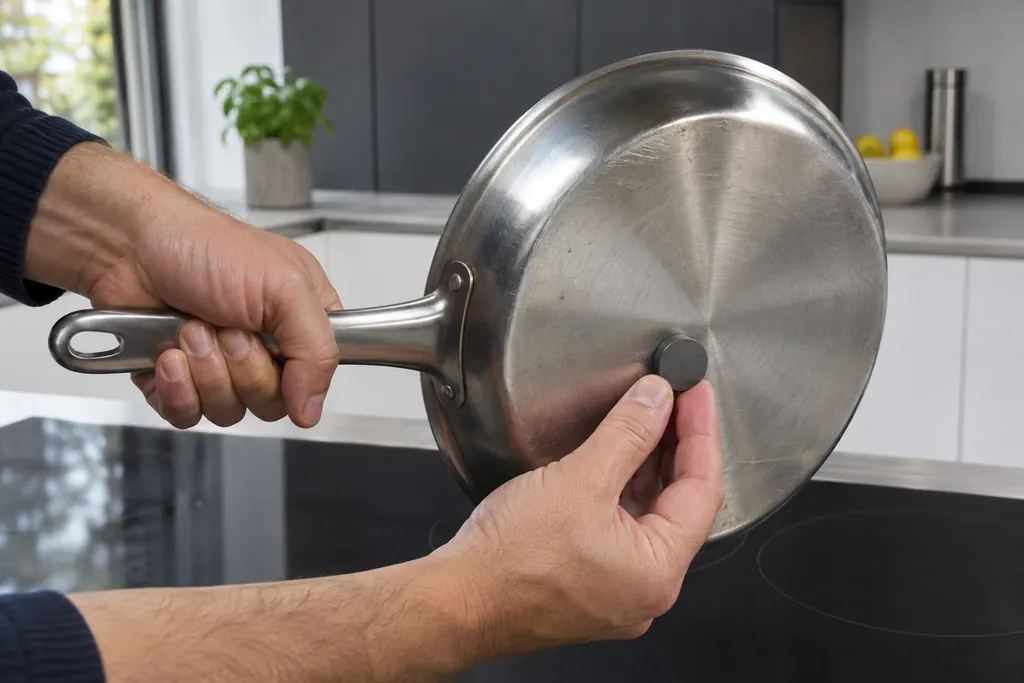
Some pans quietly trick people. A pot sold as stainless steel may have an aluminum or non-magnetic base; the magnet test catches it. A pan with a sandwich base made of layers is fine for induction if it is magnetic, and the manual says a base of multilayer material is ideal for even heat. 2
How big does the pan base have to be?#
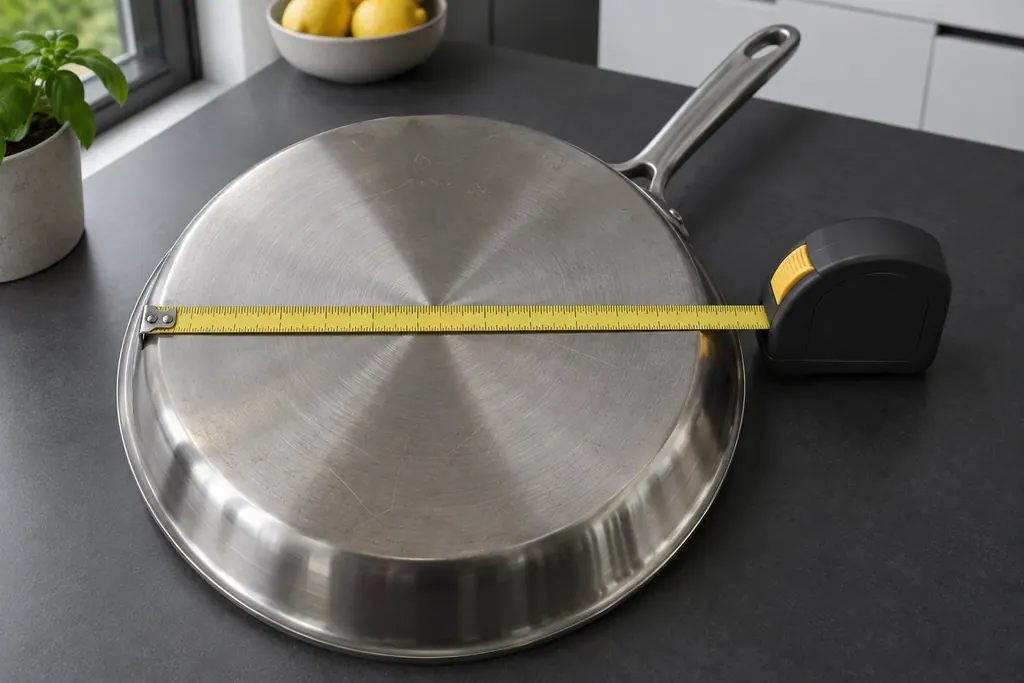
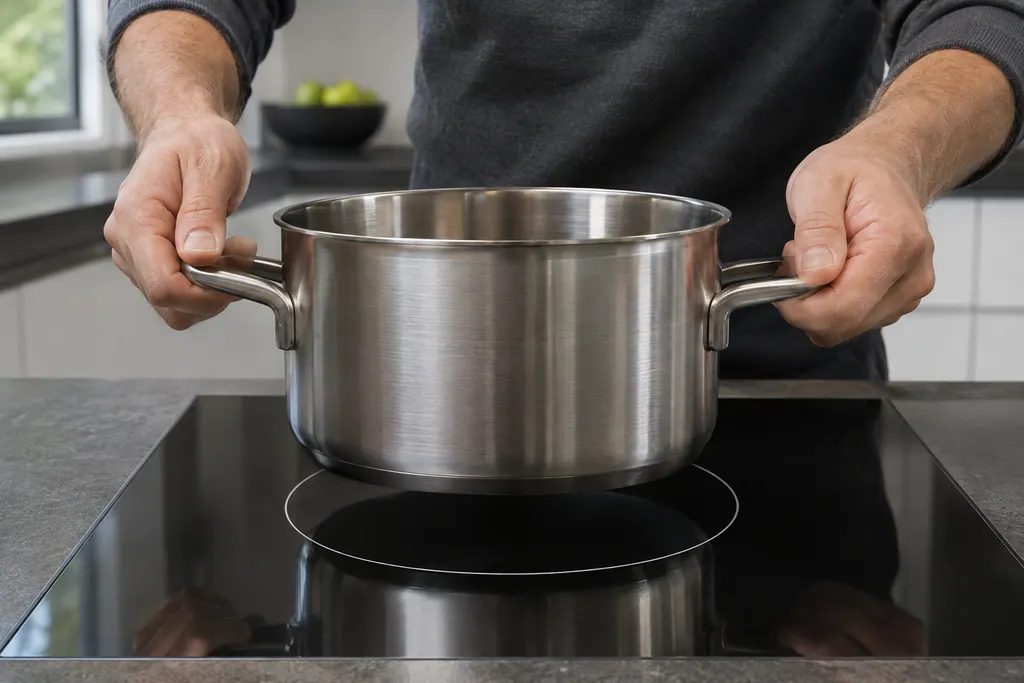
It must reach the innermost marking of the zone. Miele's page says if the pan is smaller than the innermost marking, the induction process will not work, and the zone behaves as if no cookware were on it. 1
The manual's cooking zone table gives the base range each zone accepts. On the KM 7735 FL it lists a large zone for bases of 7 to 11 in (18 to 28 cm), a small zone for 4 to 6 1/2 in (10 to 16 cm), and 5 7/8 to 9 in (15 to 23 cm) for the other two. 2 Choose a pot that fills the space between the innermost and outermost markings for the best use of the zone. 1
Several other cookware rules sit on the same pages: position the cookware as centrally as you can; use only pots and pans with smooth bases because rough bases scratch the ceramic glass; always lift cookware instead of pushing it; and where possible use pans with straight sides, because pans with sloped sides cause induction to take effect around the edge, which can discolor the rim or peel a coating. 2
Do the other safety rules affect detection?#
Yes, two do. Never use an induction adapter plate, and never use two items of cookware on one cooking zone. The manual also says cookware only partly covering a zone can make the handle very hot. 2
An adapter plate can damage or even destroy the induction generators, according to the safety instructions. 2 That is a repair you can avoid. And if a pan only partially covers a zone, the handle can get very hot, so always place it in the middle. 2
What noises are normal?#
Buzzing at high power, crackling with layered bases, whistling on linked zones, clicking at low levels, and a whirring fan are all normal. The manual lists them so you do not mistake them for a failing cooktop. 2
- Buzzing on higher power levels, which decreases or ceases when you reduce the power.
- Crackling from cookware with bases of different materials, such as sandwich bases.
- Whistling if linked cooking zones are used together with layered-base pans.
- Clicking from the electronics at lower levels, caused by switching.
- Whirring when the cooling fan turns on to protect the electronics; it may keep running after the cooktop is off. 2
Sound that is new, or louder than before, is a different matter. The fan gets its own guide: locks, covered controls and overheating messages.
Does the power level need adjusting for a new pan?#
Slightly, at times. The manual says the stated power levels are a guide, because the coil's output varies with voltage and with the size and material of the pan base. With cookware you do not know yet, set the power one level below the one listed. 2
The cooktop is programmed at the factory with 9 power levels and can be extended to 17 for finer control. 2 Those settings explain a pan that scorches at a level that worked for another pan: the same number does not mean the same heat. If a zone seems weaker than expected, that is separate from detection, and the maximum power for linked zones also matters: operating both linked zones at level 9 exceeds the permitted maximum for the two, so level 9 on one is reduced automatically if you also set level 9 on the other. Use a different cooking zone. 2
When is it not the pan?#
If a suitable, centered pan still gives u_, if FE44 or Err 044 appear with proper cookware, or if one zone never recognizes anything, the pan is no longer the likely cause. Those need a look. 13
Miele's page for FE44 lists two possible reasons: the cooktop overheated because of unsuitable cookware, or a blocked fan; it says to allow the cooktop to cool, use suitable cookware, and check the fan for objects in a drawer below or dust. 3 Err 709 is for Miele's M Sense cookware: the connection between the cookware and the cooktop failed, and the page walks through switching the cookware on and pairing it by touch. If it persists, contact service. 3 Our rows: FE44 and Err 709.
When does a pan problem become a repair?#
Book when u_ shows with a proper magnetic pan of the right size, centered; when FE44 or Err 044 returns with suitable cookware; when one zone refuses every pan; or when the glass is cracked or chipped. 13
Book a technician and share the model, the pan material and base size, the magnet result and the message. Our technician quotes a price you accept before starting, and the total is confirmed after the cooktop has been checked at your home. Repairs inside the maker's warranty period belong to the maker, while our own workmanship is warranted by us. See our cooktop service page. A cracked glass top is a stop-cooking matter: the manual forbids using a damaged cooktop and calls for an electrician right away.
Sources#
- Operating and Installation Instructions: Induction Cooktops (KM 7735 FL, KM 7745 FL, KM 7755 FL)Miele, en-US, CA edition · M.-Nr. 12 161 430 · PDF pages 13-14 (safety instructions), 21-22 (cooking zone data), 56-58 (good to know), 67 (frequently asked questions)
- u_ on the display (Miele Cooktop)Miele USA, customer assistance, cooktop · Undated web page; read in a browser 12.11.2026 · Whole page
- FE44 and Err 709 (Miele Cooktop pages)Miele USA, customer assistance, cooktop · Undated web pages; read in a browser 12.11.2026 · Whole pages