What it means
Dirt on the door contacts beside the hinge is what F252 reports. Clean the contacts and run a program again.
Miele dryer F252 / Door
Dirt on the door contacts beside the hinge is what F252 reports. Clean the contacts and run a program again.
Also shown as F252
Dirt on the door contacts beside the hinge is what F252 reports. Clean the contacts and run a program again.
Turn the dryer off first.
F252 returns after the contacts were cleaned.
Your Miele checks, kept in this browser only
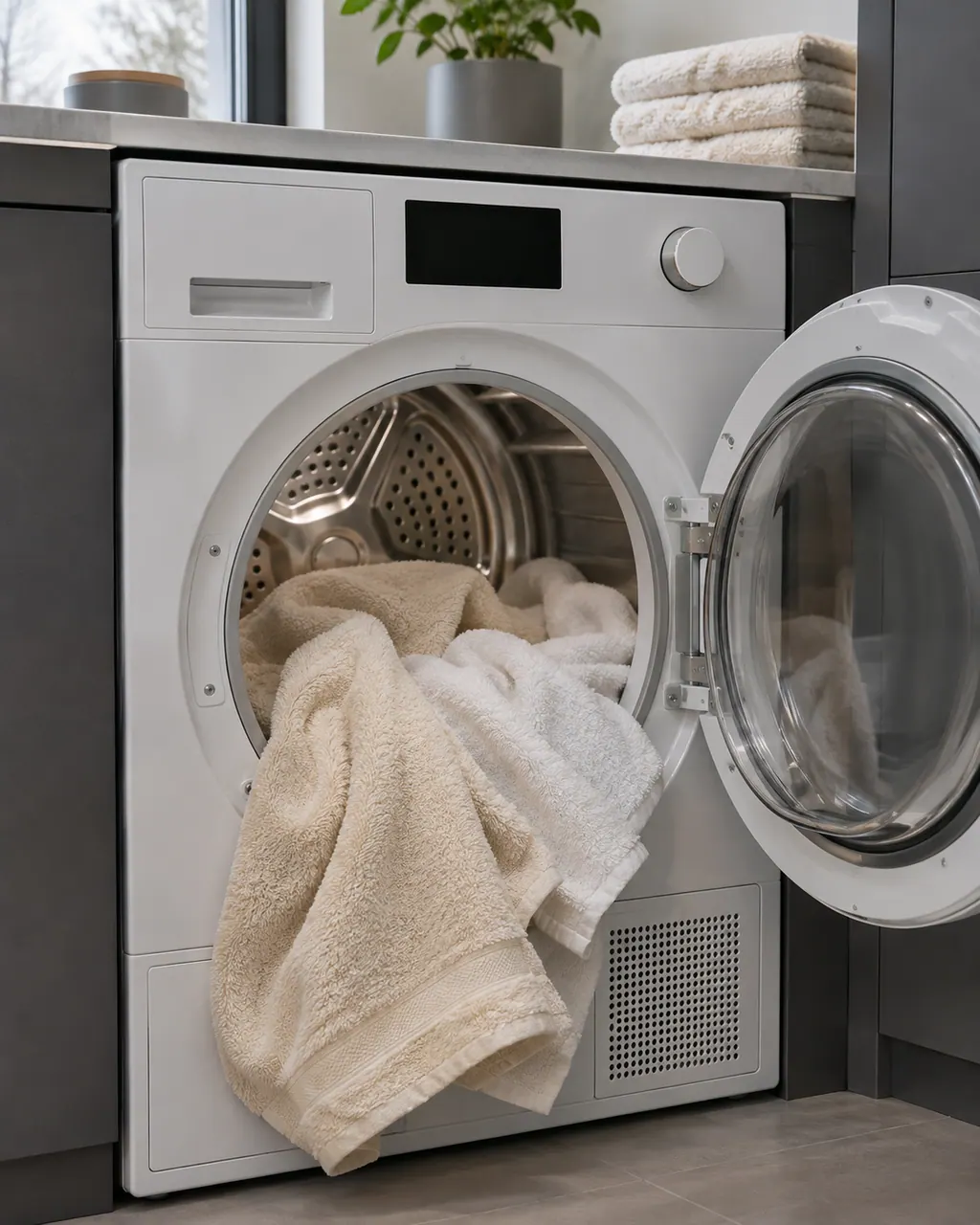
Turn the dryer off first.
Look at the door hinge area.
Wipe the contacts as the sample illustration shows.
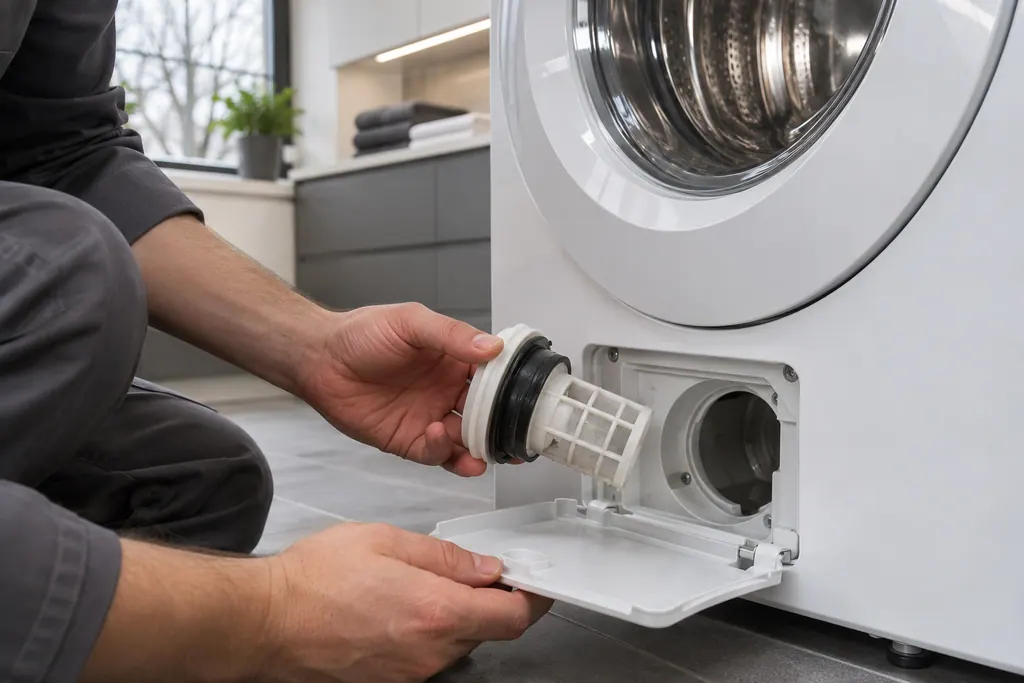
Start again.
If F252 stays, book a visit.
Give us your model and the checks you have already made, then start your request below.
Book a visitA simplified drawing, since a dishwasher, a washer and a steam oven are built quite differently. Tap any outlined part to open its photo and the check that goes with it.
"The door contacts in the area of the door hinge are dirty."
Read the supporting manualThe page shows illustrations; wipe with a clean, dry or slightly damp cloth, which is general advice.
Read the supporting manualF36 is a failed door contact (reed switch). F252 is dirt on the contacts.
Read the supporting manualThe page mentions the washing machine or dryer display.
Read the supporting manualManufacturer document
Miele USA (mieleusa.com customer assistance page)
Undated web page; read in a browser 12.11.2026 / Whole page
Read from Miele USA’s customer assistance page for F252.
"The door contacts in the area of the door hinge are dirty."
The page shows illustrations; wipe with a clean, dry or slightly damp cloth, which is general advice.
F36 is a failed door contact (reed switch). F252 is dirt on the contacts.
The page mentions the washing machine or dryer display.
Miele codes, symptoms, parts, repair visits
F36 means the door contact, a reed switch, has failed. Miele gives no owner step, so book a technician.
On a Miele heat-pump dryer, a program that runs very long or switches itself off usually traces to a warm room, clogged filters, an overfull or tangled drum, or a blocked cold-air grille. Ventilate the room, clean both filters, clear the grille and remove any visible lint from the heat exchanger area.
Book a diagnostic made for your exact model and done beside the appliance.
Where each office is, plus the access notes to pass on to us.